ZHAW simulates galaxies for the world’s largest telescope.
Using artificial intelligence to process images of outer space: ZHAW researchers are developing models that are intended to analyze data in the future from the most powerful radio telescope of all time. In doing so, many aspects need to be taken into account.
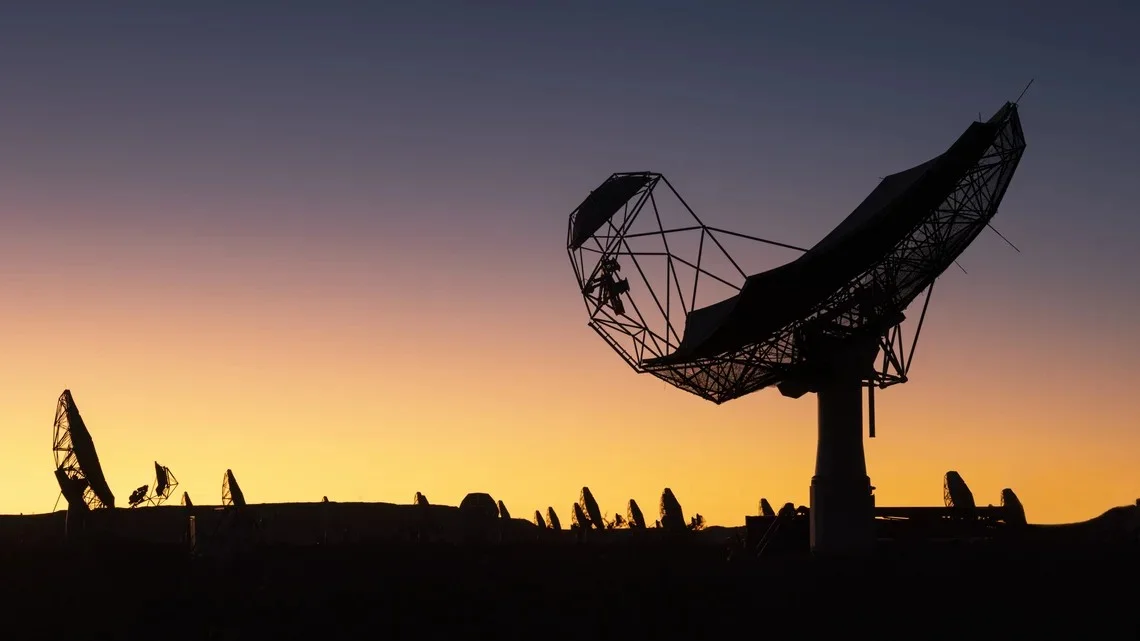
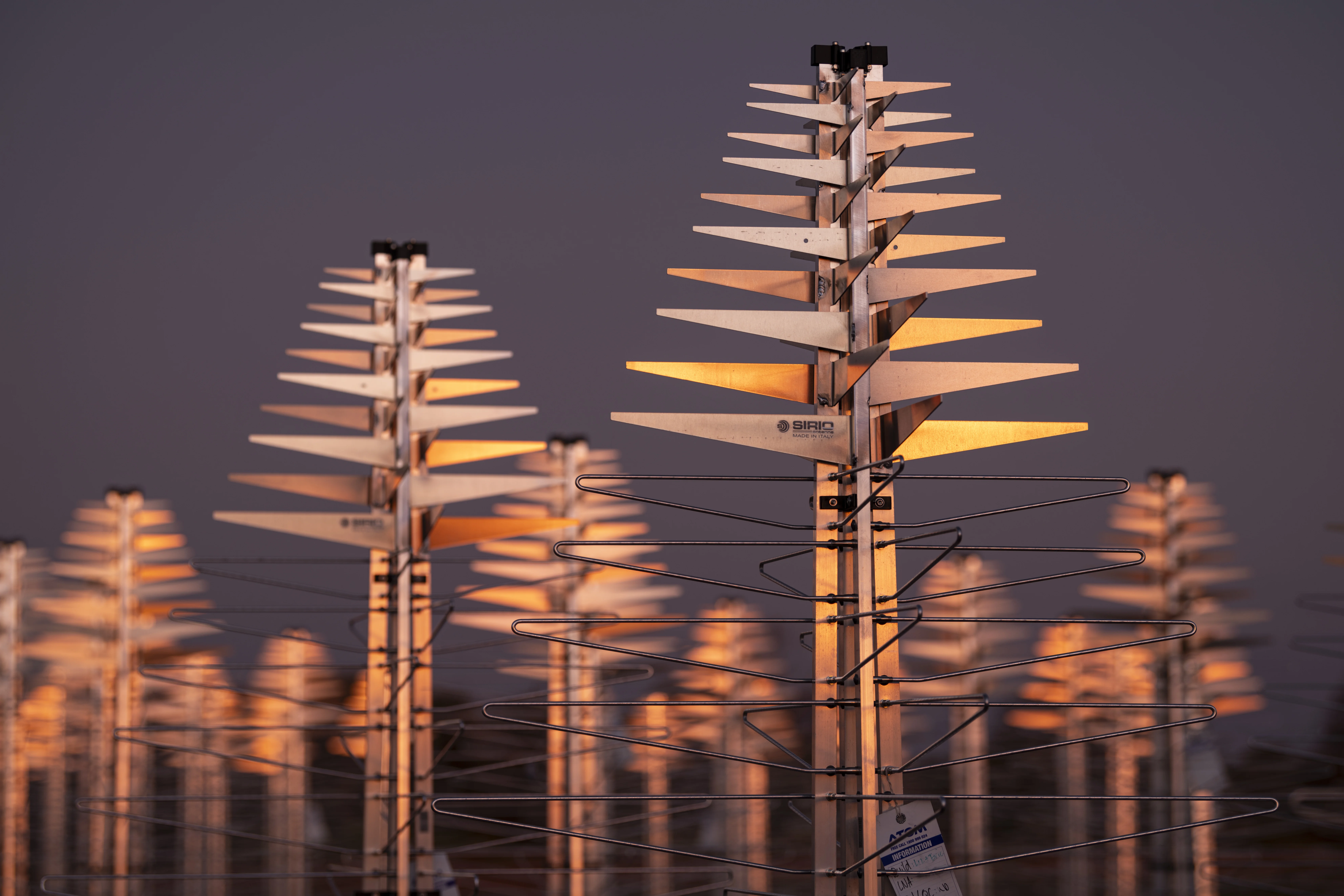
In South Africa and Australia, the Square Kilometre Array Observatory (SKAO) is building the most powerful radio telescopes humanity has ever constructed. The nearly 200 gigantic dishes and more than 130,000 antennas will likely begin producing high-resolution images of outer space and the first galaxies at both sites from around 2030. “The SKA telescopes generate an overwhelming volume of data—around 700 petabytes per year—far more than a human could examine in a lifetime,” explains Philipp Denzel from the ZHAW Centre for Artificial Intelligence.
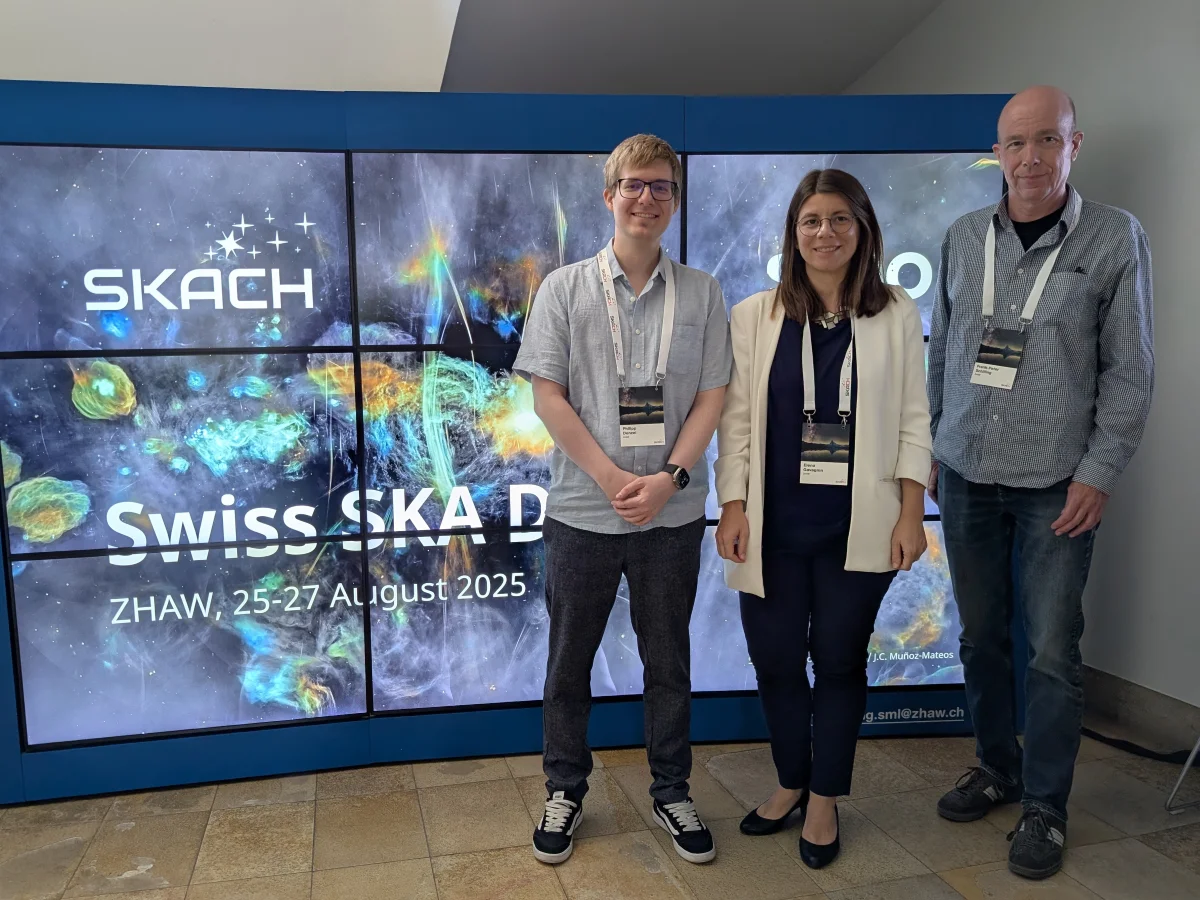
That is why ZHAW is already practising today—with artificial intelligence (AI). Dr. Philipp Denzel, Dr. Elena Gavagnin, and Dr. Frank-Peter Schilling are developing and training models that simulate the sky as realistically as possible: “Neural networks can be used to simulate complex structures such as galaxies and to automatically detect patterns in observational data.” The simulated galaxy replicas take into account the physical properties of all the matter they contain, including those components that remain invisible to the telescopes. In this way, theory and observations can be compared, providing important insights into galaxies. In many respects, the formation of galaxies is still a mystery.
Swiss AI for images from Australia and South Africa
In the future, AI is set to be applied to the SKAO’s real observations and to process a large share of the vast amount of data collected. “AI helps researchers by highlighting the SKAO’s most exciting discoveries for further analysis,” says Philipp Denzel. The AI methods used in the project to tackle radio-telescope data-analysis problems are similar to models also used, for example, in research projects in medical imaging. These include, among others, so-called diffusion models. This underscores the multidisciplinary nature of ZHAW’s research. But why are models for data from a telescope in the Southern Hemisphere being developed in Winterthur?
Switzerland has been part of the international project since 2022 through the SKA Switzerland Consortium (SKACH), because SKAO is of enormous global relevance in the field of radio astronomy. Participation enables early access to the collected data and a say in the largest research endeavor since CERN. As one of ten Swiss higher-education institutions involved in the project via SKACH, ZHAW is leading the development of AI-based galaxy simulations. On ZHAW’s side, in addition to the ZHAW School of Engineering, the ZHAW School of Management and Law is also involved, where the annual meeting of the Swiss SKACH research consortium—the Swiss SKA Days—also took place at the end of August 2025.
Factoring in light pollution and satellites
The ZHAW team is continuously further developing its models during the SKAO’s construction phase. The next step is to incorporate sources of interference such as satellite trails. This will simulate how the SKAO will effectively collect data in the future. “Disturbances in the sky can make the SKAO’s observations unusable, which is why we already want to simulate the impact they will have,” says Philipp Denzel. Because of potential interference from light and human activity, the SKAO was also built far away from civilization—in South Africa’s Karoo, a semi-desert landscape, and in the Australian Outback.
Less energy and dark matter
The ZHAW team is also working together with two Master’s students to make the models more accurate, faster, and more energy-efficient. In addition, the simulations are to be extended from 2D to 3D and to incorporate astrochemical aspects. Observations of the rare gravitational lensing effect are also to be taken into account in order to capture the invisible dark matter more precisely in the images. By optimizing the AI, ZHAW is contributing to the goal of one day gaining new insights with the SKAO into dark matter, the formation of galaxies, and perhaps even answers to the biggest open questions in cosmology.
“Fun” facts about the SKA
- The wavelength of radio emission from neutral hydrogen is 21 cm: the SKA is specifically designed to measure this 21-cm line, because hydrogen is the most abundant element in the universe.
- Extreme conditions prevail at the SKA sites: in the Karoo (South Africa) and the Outback (Australia), temperatures can rise to 56°C. That’s why strict protective requirements apply for construction workers.
- The land at the Australian site belongs to Aboriginal communities: an agreement was made to ensure the SKA does not cause permanent damage to the land. For this reason, the antennas were installed without anchoring.
- Animals also live at the SKA sites: in Australia, kangaroos have already been observed knocking over antennas. Engineers have to set them back upright on a regular basis.