When Does Quantum Machine Learning Actually Help? First Doctoral Thesis on Quantum Machine Learning at ZHAW.
Quantum computers process information in a fundamentally different way than classical machines, exploiting superposition, entanglement, interference, and the structure of quantum measurement. Whether these properties translate into practical advantages for machine learning is one of the most actively debated questions in the field. A new PhD thesis at ZHAW's Institute of Computer Science (InIT) sets out to answer it.
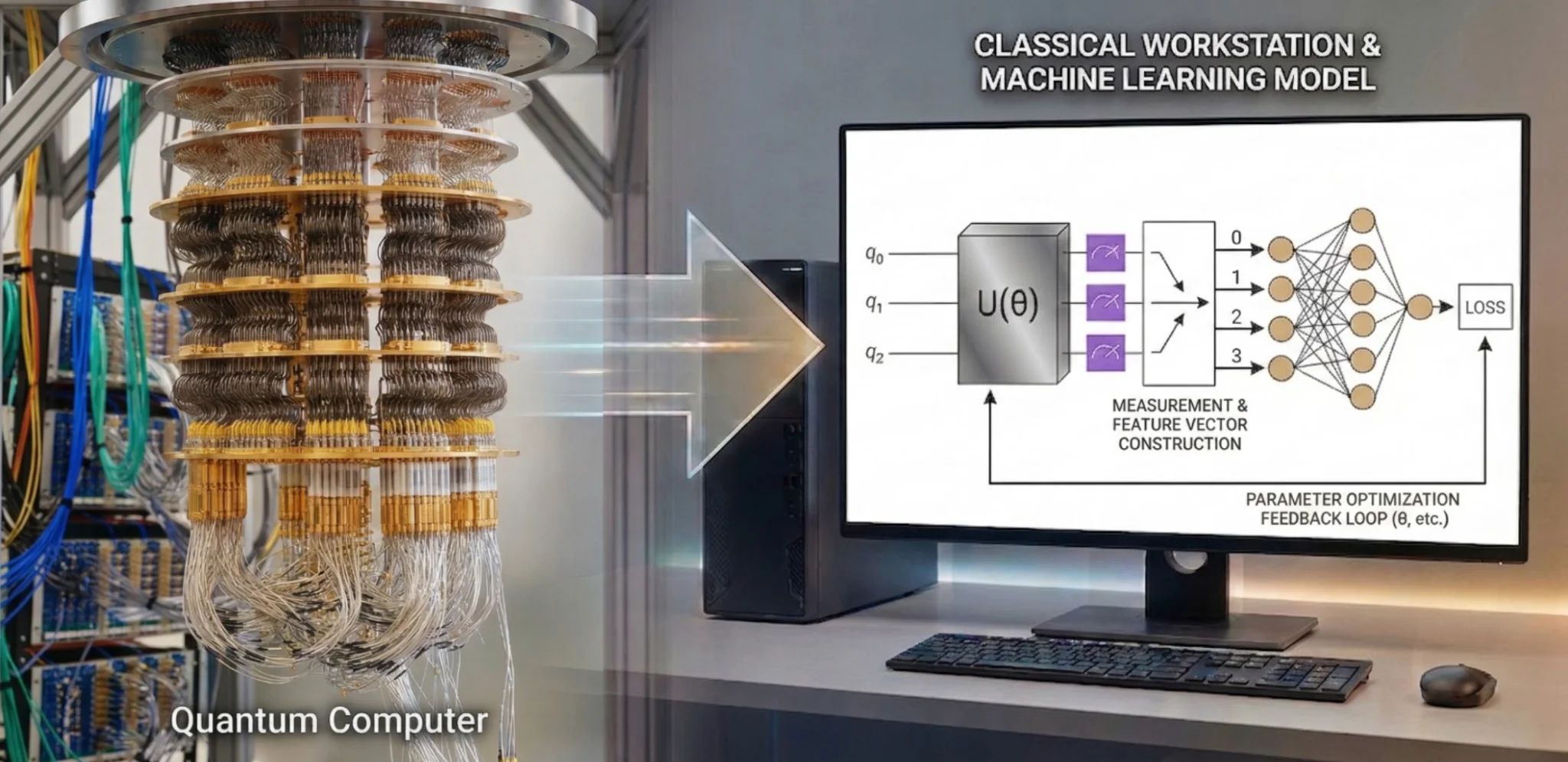
Quantum machine learning (QML) is a growing research area with strong theoretical foundations. However, in practice, it is often difficult to tell whether a quantum approach genuinely outperforms a well-tuned classical alternative on a given problem. Results across studies are hard to compare: datasets differ, evaluation methods vary, and resource costs such as the overhead of encoding classical data into quantum states are rarely accounted for.
Answers to these questions shall be provided by the first PhD thesis on quantum machine learning at Zurich University of Applied Science funded by the ZHAW School of Engineering. One of the initial goals of the PhD thesis is to develop a benchmark for evaluating quantum machine learning algorithms to identify a potential advantage over their classical counterparts. Multiple QML method families are tested under identical conditions: same datasets, same optimization budgets, same noise models. Experiments will be run both on simulators and on real quantum hardware.
“The goal is to systematically evaluate how well QML can tackle challenging machine learning and AI problems with practical applications. Eventually we want to build quantum algorithms that surpass their classical counterparts.”, says Prof. Dr. Kurt Stockinger.
The team
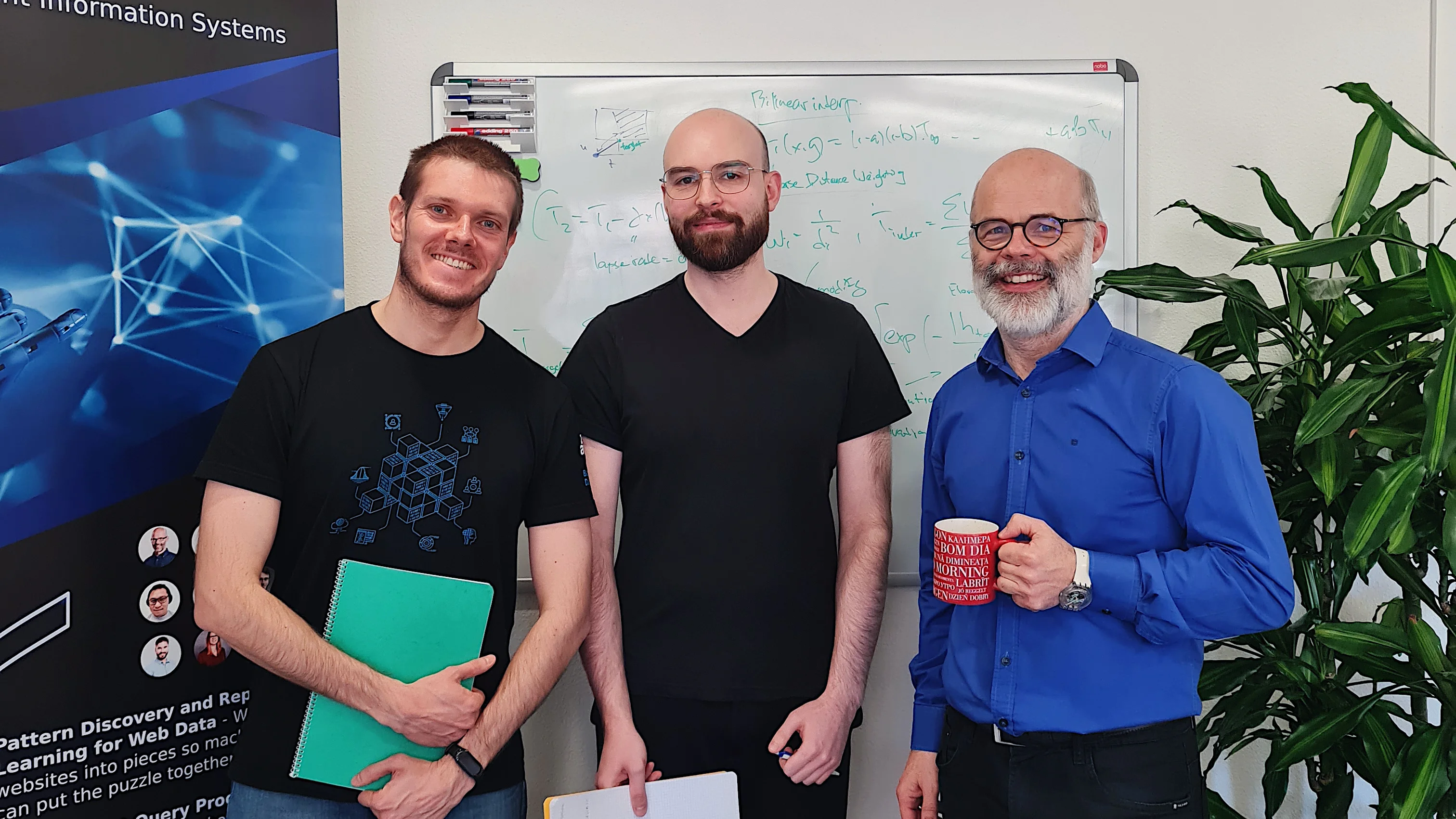
The project is a joint PhD between ZHAW and the University of Zurich, supervised by Prof. Dr. Kurt Stockinger and Dr. Pavel Sulimov. It builds on several years of quantum computing research at ZHAW, with recent publications in top-tier scientific journals such as IEEE Access, Scientific Reports, and Quantum Machine Intelligence. Tobias Fankhauser, who carries out the PhD, worked on quantum computing in his bachelor's thesis at ZHAW co-supervised by Kurt Stockinger and Prof. Dr. Rudolf Füchslin from the Institute of Applied Mathematics and Physics (IAMP). Tobias brings deep AI expertise from his master's at University of Zurich.
"Between theoretical possibility and practical benefit, there is still a large gap in quantum machine learning. We now have a fairly good understanding of what can go wrong. The more interesting question is under which conditions it works despite all of that.", says Tobias Fankhauser.