Visit from India makes clearly demonstrates: Agroecology works on a large scale
What does it take for agroecology to strengthen entire regions in a sustainable way? As part of the master's module “Natural Resource Management in Developing Countries,” a delegation from Andhra Pradesh provided insight into a program that shows how agriculture can be rethought and implemented on a large scale.
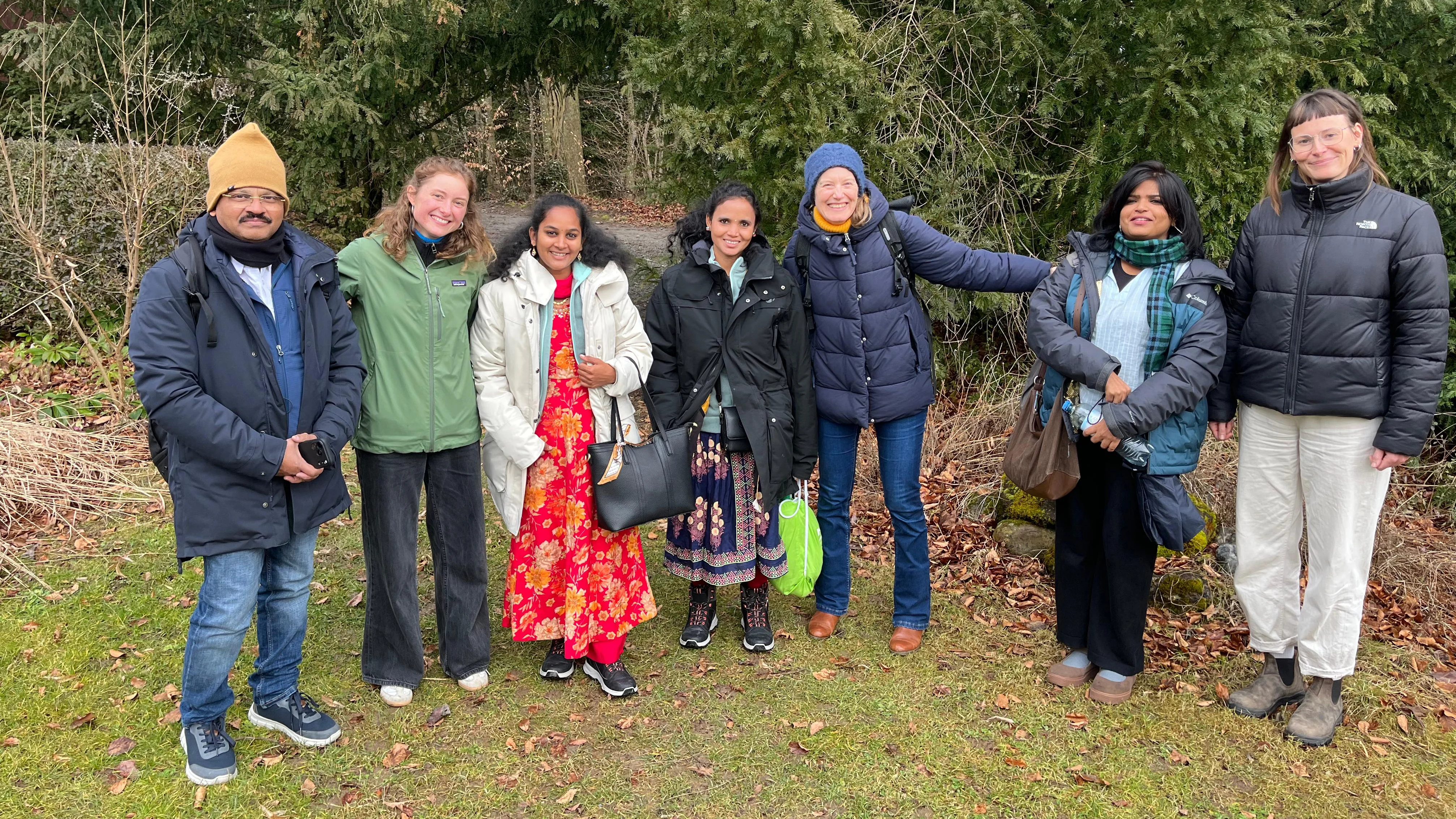
The visit from Andhra Pradesh offered a rare insight into an agroecological transformation process that extends far beyond individual farms. For several years, the Andhra Pradesh Community Managed Natural Farming (APCNF) movement has been pursuing the goal of completely eliminating chemical synthetic fertilizers and pesticides from agriculture while strengthening local ecosystems and social networks.
The size and organizational depth of the program are particularly striking. With around 1.2 million participating farmers, APCNF is one of the most extensive agroecological initiatives worldwide. This widespread adoption is made possible by a close-knit network of training courses, peer-to-peer learning formats, and regional coordination structures that empower farming communities to drive change independently.
Women's self-help groups, which shape the social infrastructure of villages in many places, play a key role in this. They organize training courses, accompany new practices in the introductory phase, and ensure that knowledge is passed on within the communities. In this way, transformation is not only communicated but also permanently anchored.
At the heart of agricultural practice is the soil as a living system. Instead of using external inputs, APCNF relies on natural methods: promoting the soil microbiome, diverse crop rotations, cover crops, and the use of locally produced natural preparations. These measures regenerate soil fertility, improve water retention capacities, and reduce costs at the same time.
The delegation's visit clearly showed how political support, community organization, and ecological knowledge can work together. APCNF demonstrates that agroecological transformation is particularly effective when it is socially embedded and local people become active agents of change.
Further links: