Matura project – flight characteristics of a rocket
In the ZHAW wind tunnel, Sasha Asti succeeded in precisely determining the air resistance of his 3D-printed model rocket – and thus making astonishingly accurate flight predictions.
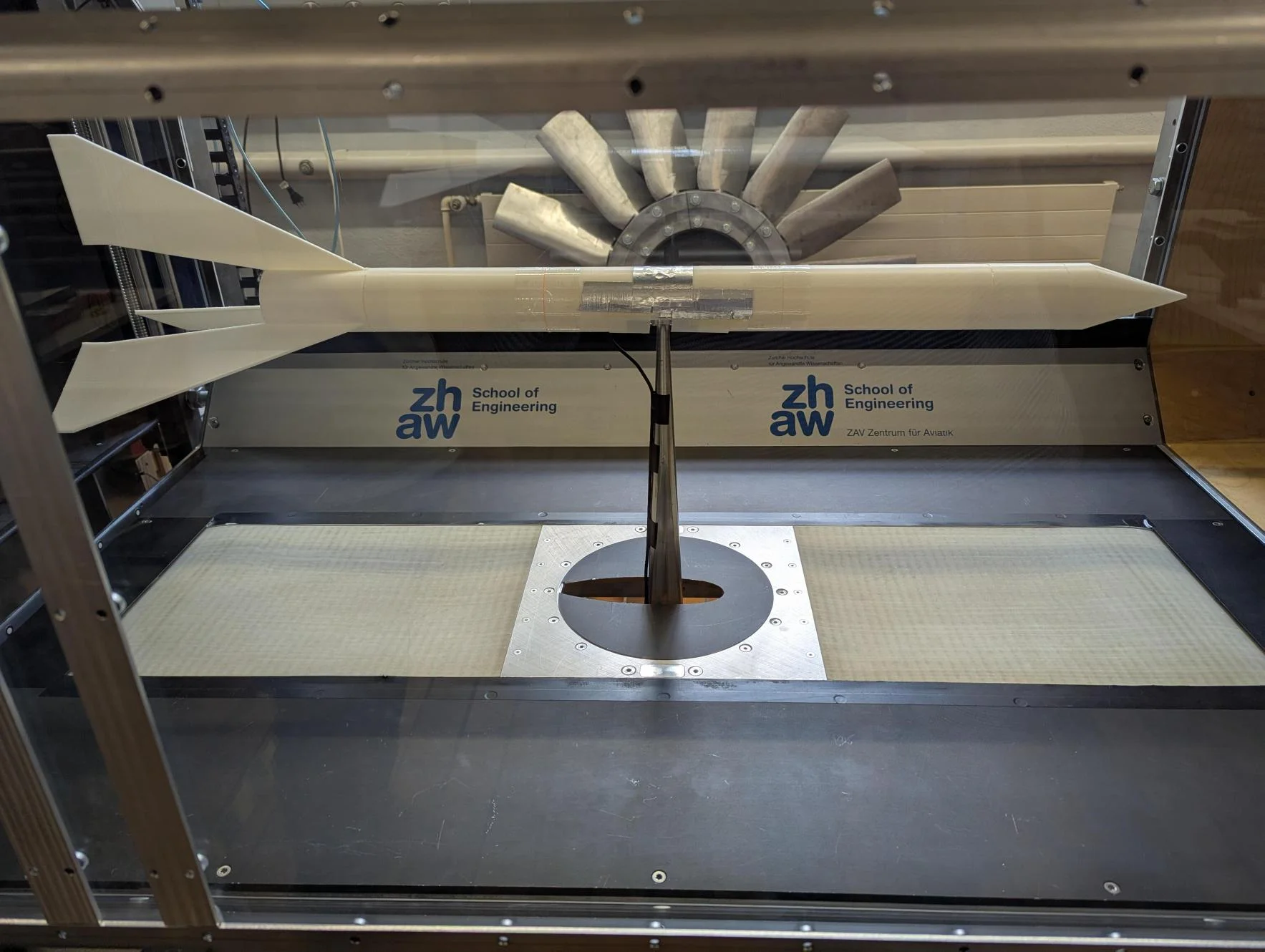
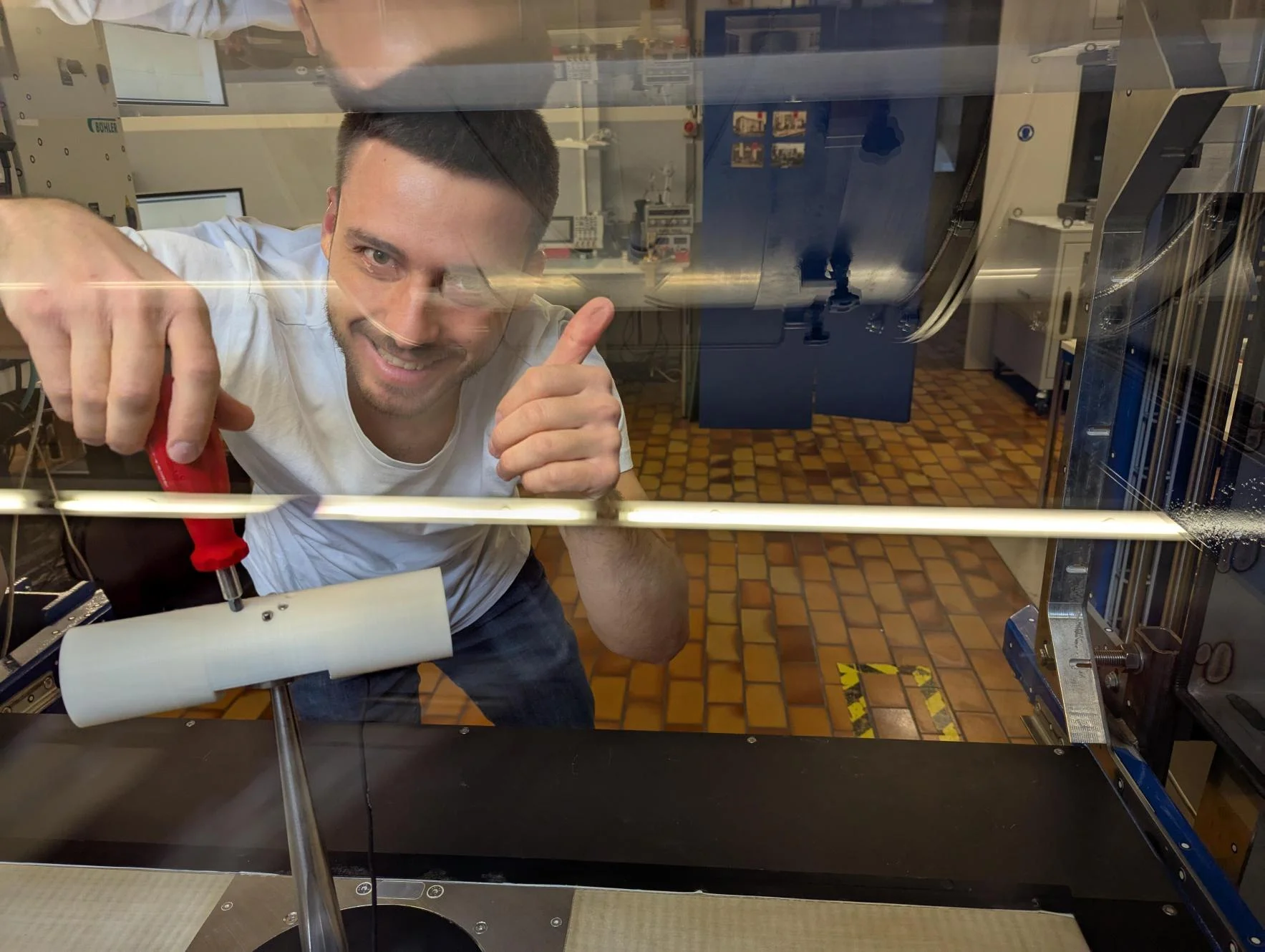
Sasha Asti’s Matura project deals with the prediction of the speed, trajectory and altitude of a model rocket using conventional methods. To this end, he designed several rockets in a 3D printer. The key to this was the precise measurement of air resistance, which proved to be a major challenge.
He initially tried to determine the air resistance by conducting a free-fall test. The rocket was dropped from a height of 20 metres for this purpose. The method is based on the fact that an object in free fall reaches a terminal velocity at which the air resistance is equal to the weight. If the speed and weight are known, the resistance can be calculated. However, the failure was inevitable, as the rocket would have needed a fall height of over 150 metres to reach the terminal velocity, which made precise measurement impossible.
The solution was provided by the wind tunnel at ZHAW Winterthur. Here, the flow velocity can be precisely set and a scale measures the force acting on the model. With the help of the scientific assistant on site, a suitable measuring setup could be realised. One particular challenge was securing the rocket to the scale, as it was not designed for his model. The construction had to be rigid enough to avoid distorting the measurement results. Together, they identified and resolved two potential sources of error that would have distorted the result before the start.
Thanks to the measurements, he was able to make predictions that differed by 5% or less from the test flight.
He would like to thank ZHAW Winterthur and the research assistant, who was always helpful. He learned first-hand how a little creativity can also help to solve unexpected problems – a skill that is certainly very valuable in an engineering degree programme.