Coaching Perspectives 2026
17 September 2026
Artificial Intelligence is already reshaping coaching practice. Coaching Perspectives 2026 brings international coaches, psychologists and researchers together to explore how state-of-the-art human coaching can be responsibly and meaningfully enriched by AI.
At the 2024 Coaching Perspectives conference, we asked: AI – game changer or hype?
We learned that AI is developing at an impressively rapid pace and is already capable of performing many tasks – sometimes even better than human beings. Yet we also discovered that real transformation still depends on mature human qualities and true human intelligence: trust, empathy, ethical judgment, reflected experience, intuition, reflective dialogue, and embodiment. All these insights set the stage for 2026.
State‑of‑the‑art coaching meets AI
Coaching Perspectives 2026 continues this conversation and puts one core question at the center: How can state-of-the-art, high-quality coaching – offered by and for human beings, and going beyond simple goal-attainment processes – be enriched or even enhanced by AI?
We are convinced that this ambitious question contains the true potential of the promising relationship between Artificial Intelligence and coaching. However, as a crucial starting point, it also requires a very clear understanding of what state-of-the-art human coaching is and what it is not.
The core question for 2026
Building on this core question, the second edition of Coaching Perspectives – organized by two leading universities of applied sciences offering professional coaching training in Switzerland – will explore, together with participants and invited international guests, the following topics:
- What do we really mean by state-of-the-art, high-quality human coaching today?
- What are the current risks of introducing Artificial Intelligence into the discussion of coaching?
Where lie the real potentials for true innovation in human coaching when brought together with Artificial Intelligence in a truly intelligent way?
What we will explore together
Together with international experts from practice and research, we will examine:
- what do we mean today by state‑of‑the‑art, high‑quality human coaching?
- what risks, limitations and ethical challenges accompany the integration of AI?
- where do the genuine opportunities for innovation arise when human and artificial intelligence come together intelligently?
The goal is not to provide ready‑made answers, but to help participants develop a well‑informed, reflective and professionally grounded stance on AI in coaching.
Keynote Speaker and Topics
Keynote 1
| Surfing the Third Wave: Coaching in the Age of AI |
|---|
| Abstract: By mid-2026, debates about whether AI coaching is coming, or whether it is «real» coaching, may already be obsolete. With tools like Claude, ChatGPT and AI coach bots advancing rapidly, the tsunami of AI coaching is here. The real question becomes: what is coaching in a «third wave» of human development? The first wave was counselling and psychotherapy. The second saw coaching grow from a few hundred practitioners in the late 1980s to more than 50,000 worldwide. Now a third wave is emerging, where AI can scale behaviour change and goal attainment. If AI can outperform even the best human coaches, what remains the role of human support? Draw-ing on ideas from psychologists Scott Barry Kaufman and Richard Tedeschi, this talk explores what the next wave of human-to-human development might look like. |

Jeffrey Hull, Ph.D. BCC is CEO of Leadershift, Inc. a leadership development consultancy based in New York City and Amsterdam. Named by Thinkers 50 as one of the fifty best coaches in the world in 2024, he, along with co-author Margaret Moore, was the winner of the Thinkers50 award for Coaching and Mentoring in 2025. Dr. Hull is the best-selling author of FLEX: The Art and Science of Leadership in a Changing World in 2019 (available in 5 languages), and The Science of Leadership: Nine Ways to Expand Your Impact, from Penguin Random House and Berrett-Koehler (July 2025). A highly sought coach with over twenty-five years C-suite coaching experience, Dr. Hull is the Executive Director of the Institute of Coaching, a Harvard Medical School Affiliate, and a Clinical Instructor in Psychology at Harvard Medical School.
Keynote 2
| Coaching Excellence in the Age of AI: Navigating Human Values in AI(-Enhanced) Coaching |
|---|
| Abstract: Over the past two decades, coaching has become an established human resource development (HRD) intervention, yet the field remains loosely defined and largely unregulated, raising ethical concerns. With the rapid rise of AI-supported coaching, new questions emerge. These systems promise efficiency, accessibility and scalability, but also introduce risks as AI becomes a social actor shaping coaching interactions. If poorly trained, AI may reinforce agreement, reduce expo-sure to diverse perspectives, encourage shallow reflection and subtly influence decisions. Such dynamics threaten autonomy-supportive, ethics-oriented coaching. The key challenge is there-fore how AI can be intentionally designed and trained to strengthen, rather than replace, the relational depth, autonomy support and ethical integrity at the core of professional coaching. |
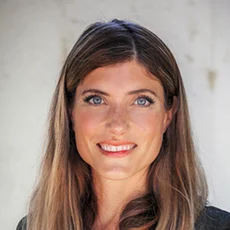
Sandra J. Diller is a Professor of Organizational Psychology at the Seeburg Castle University (SCU), a Research Affiliate at Harvard Medical School's Institute of Coaching, and an Affiliate at the Ludwig-Maximilian-University’s Center for Leadership and People Management. She researches leadership and personnel development and is responsible for the MBA in Coaching at SCU.
Keynote 3 (online)
| Will Robots Become Our Coaches? Coaching in the Age of Social Robotics |
|---|
| Abstract: Advances in artificial intelligence and social robotics are transforming how humans interact with intelligent systems. Robots are increasingly entering domains such as healthcare, education and training. At the same time, collaborative robots («cobots») are becoming part of everyday work-places, changing the environments in which many coaching clients work. This raises a key question for the coaching profession: could robots one day become coaches or co-coaches? Drawing on research in psychology and human–robot interaction, this keynote explores how people often respond to robots in social ways, experiencing trust and relational dynamics, while deeper coaching elements such as meaning-making and insight remain fundamentally human. |

Prof. Dr. Melanie Hasenbein is a professor of business psychology and artificial intelligence at SRH Fernhochschule – The Mobile University in Germany, where she leads the master program Business Psychology & AI. Her work focuses on human-centered artificial intelligence, and the question of how emerging technologies are reshaping work, leadership, and human development. She is the author of the Springer books Human and AI in Organizations (2023) and The Human in the Digital Workplace (2020), which explore the psychological implications of digital and AI transformation. Alongside her academic work, she is a coach and consultant at CHANGE FORMAT, supporting leaders and organizations in navigating transformation processes and designing more human-centered futures of work.
Panel Discussion
With representatives from leading professional coaching associations:

Simone Mählmann, based in Berlin, is a partner at HRpepper, with many years of experience in leadership development, organizational learning, and coaching.
Simone holds a degree in psychology and worked for over 14 years at the HR consulting firm Kienbaum, where, among other roles, she served as Head of Coaching and was responsible for establishing the digital coaching provider evelop_me. She then served as Director of Customer Advisory at Sharpist, a leading provider of digital coaching in the DACH region. There, she supported organizations in introducing and establishing coaching cultures. Throughout her career, she has also worked with leaders at all hierarchical levels and across various industries to foster their development and ability to adapt to change.
In addition to her role as a partner at HRpepper, Simone is committed to the further development of the coaching industry as Chair of the Innovation Advisory Board at thankscoach and Vice Chair of the German Federal Association of Coaching (DBVC).
––––––––––––––––––––––––––––––––––––––––––––––––––––––––––––––––

Marc Gassmann accompanies organisations and leaders through demanding change, keeping people at the center of the work. He is Managing Partner of ComTeam in Switzerland, part of the international ComTeamGroup, and a member of the BSO. He works as an organisational developer, systemic coach, and lecturer, focusing on team and organisational development, corporate culture, leadership, and change management.
He brings two decades of experience in international and intercultural projects across a wide range of industries, more than ten years leading digital transformation, and an early, hands-on engagement with artificial intelligence and what it means for leadership and coaching. Seeing organisations as living systems, he favours interventions tailored to each culture and situation over ready-made models. His engineering degree in business informatics, Executive MBA, and postgraduate qualification in coaching, supervision and organisational consulting combine analytical thinking and systemic process work.
––––––––––––––––––––––––––––––––––––––––––––––––––––––––––––––––
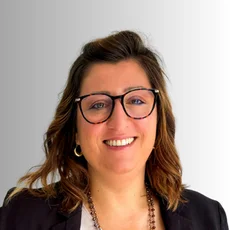
Elena Scolaro is an ICF-accredited executive coach and organizational development consultant with over fifteen years of multinational experience in HR.
Through Elevate Growth, her coaching and consulting practice based in Switzerland, she designs processes and experiences that help people and organizations change in ways that hold. What sets her apart is the way she moves between pragmatic and academic perspectives: she is completing an Executive DBA at Business School Lausanne, studying how managers govern trust and legitimacy in AI-mediated people development and human-AI teaming, and uses her consulting practice as a testing ground for that research, turning findings into practical tools for HR and leadership teams navigating AI adoption. A volunteer member of the ICF Switzerland AI working group, Elena is actively involved in creating and moderating events on coaching and AI for the Swiss coaching community.
––––––––––––––––––––––––––––––––––––––––––––––––––––––––––––––––
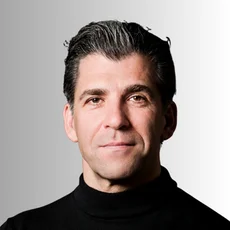
As Founder and Managing Partner of 2PEAK Leadership Experiences, Beat Calabretti advises CEOs, boards, and executive teams on leadership, culture, and business transformation.
With more than 30 years of international executive experience, he has held senior leadership roles at Barry Callebaut, Siemens Healthineers, Syngenta, Celgene, Roche, TUI Group, and Mövenpick Hotels & Resorts, leading large-scale transformation, talent, and organizational development initiatives across Europe, the Americas, Asia, and Africa. He combines extensive executive experience with a strong academic foundation, holding master's degrees in Organization Consulting & Change and Human Resource Management.
Beat is an accredited Executive Coach and Organizational and Coaching Supervisor, and serves on the Executive Board of EMCC Switzerland, where he contributes to advancing professional coaching and supervision standards. He is passionate about developing leaders and believes that sustainable transformation is achieved when strategy, leadership, culture, and organizational capability evolve together.
Workshop 1
| Evidence & research: Prof. Nicky Terblanche shares key findings from recent AI-coaching research and discusses what human coaches can learn from emerging evidence. |
|---|
| Abstract: Artificial intelligence (AI) is increasingly entering the coaching profession, prompting new ques-tions about how coaching is practiced and what role human coaches may play in the future. This interactive workshop draws on recent research studies on AI coaching that challenge some commonly held assumptions within the coaching field. The session will begin with short summar-ies of the studies and their key findings. Rather than focusing on technical aspects of AI, the em-phasis will be on what these findings might mean for human coaching practice. Participants will then work in small groups to reflect on the implications of the research and discuss how the in-sights might inform their own coaching approaches. Through facilitated discussion and shared reflection, the workshop aims to stimulate dialogue about how emerging evidence from AI coach-ing research can deepen our understanding of coaching practice and potentially inform how hu-man coaches work with clients in the future. |

Prof. Nicky Terblanche is an academic, researcher, leadership coach and entrepreneur. He has a master’s degree and PhD in Leadership Coaching and a master’s degree in electronic and software engineering. He is Professor of Leadership Coaching and Research Methodology at Stellenbosch Business School, South Africa. His research interests include leadership coaching with a focus on Artificial Intelligence Coaching. He also runs an executive and leadership coaching practice. Nicky has published more than 50 peer-reviewed research articles and book chapters and regularly presents at international conferences as keynote speaker. He is also the founder and CEO CoachVici.com that creates AI Coaches for organisations.
Workshop 2
| Customer perspective: Stefan Stenzel reflects on how organizations experience AI in coaching and what remains uniquely human in development and leadership work. |
|---|
| Abstract: Humans have long used their inventive spirit to shape new living and working environments, but today’s AI can perform not only physical tasks but also intellectual ones. This raises fears of mar-ginalization or replacement, including in coaching and the workplace. People oscillate between confidence, excitement, and feelings of power on one side, and insecurity or powerlessness on the other. The workshop invites discussion on the irreplaceable core of human existence and offers impulses for clear social and instrumental role differentiation. With this understanding, machines may even support our growth as people, coaches, and leaders. The session is a call to remain proud of being human. |

Stefan Stenzel (Dipl.-Psych.) studied Organizational Psychology at Heidelberg and Mannheim with a minor in business administration. He has nearly 30 years of experience in PD and OD. Since 2001, he has worked at SAP SE as an HR Senior Expert for Learning in Global Leadership Development with varying responsibilities. Following his initial coaching training in 1998, he has been an internal coach at SAP since 2002. With short interruptions he is globally responsible for the external coach pool across all management levels and is currently implementing a coachbot to complement the service portfolio. He is Co-founder of DBVC e.V. in 2004. In 2023 he co-founded in this context with, Dr. Uwe Böning. the so called Think Tank “Future of Coaching” . He is author of various publications on the topic of (the future of) coaching.
Workshop 3
| Human essence: Madeline McNeely explores how somatic intelligence, presence, and relational attunement define the core of human coaching in an AI-mediated world. |
|---|
| Abstract: In an era where AI is capable of dialogue and even triggering somatic responses, what does state of the art human coaching look like now? Leadership Embodiment and relational neuroscience form the core answer distinguishing it from AI interactions. In this workshop, we explore contemporary coaching as an embodied, relational practice. We will discuss what values should guide the integration of AI and what are the moral and evolutionary implications of designing AI coaches in a world already challenged by declining human connection. Through experiential practices, participants will leave with an understanding of why relational presence, somatic awareness, and human to human connection remain central to coaching in an AI mediated world. |
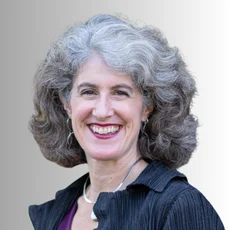
Madeline McNeely is a master‑level leadership and executive coach whose mission is to condition leaders and organizations to do meaningful work for decades. Founder of Conditioning Leaders LLC, she brings more than 30 years of experience advancing belonging, justice, equity, inclusion, and diversity across sectors. Her global perspective – shaped by studying and working in Kenya and Senegal – grounds her interdisciplinary approach as a coach, facilitator, consultant, and educator. As a specialist in somatic intelligence, embodied leadership, and trauma‑informed practice, Madeline inspires leaders to cultivate presence, relational intelligence, and trust as they navigate complex organizational, and community challenges. She teaches at Harvard’s Division of Continuing Education and has coached hundreds of leaders across corporate, nonprofit, and government settings, always championing the truth that the «soft stuff is the hard stuff».
Workshop 4
| Relationship building: Vanessa Mai, PhD, examines how coaching relationships evolve when AI-supported reflection becomes part of the coaching process. |
|---|
| Abstract: The increasing availability of AI-based coaching tools raises fundamental questions for profes-sional coaching practice. This workshop explores how coaching changes when AI-supported reflection becomes part of the process. Drawing on empirical findings from chatbot-based coaching and practitioner insights, it examines how AI can be integrated before or between ses-sions, e.g. to clarify concerns or support low-threshold engagement. AI-mediated interaction can be perceived as accessible and non-judgmental, yet interactions are often shorter and more task-oriented. The workshop reflects on implications for coaching practice and professional re-sponsibility and invites participants to develop a grounded perspective on integrating AI into coaching. |

Dr. rer. nat. Vanessa Mai is head of the «Post-Digital Education & Meta-Learning» research group at Cologne Cobots Lab at TH Köln/University of Applied Sciences. She is also a member of the board of the Center for Academic Development at TH Köln. As a systemic coach and supervisor (DGSv-certified), she researches and teaches in the field of human-AI interaction in coaching and learning processes – particularly with regard to the effectiveness of hybrid learning and coaching formats. In her doctoral thesis, she investigated factors for building relationships in AI-based human-machine coaching. To this end, she developed and evaluated a coaching chatbot for students. Vanessa studied psychology, communication sciences, and linguistics at RWTH Aachen University and works as a freelance business coach.
Workshop 6
| The AI Sparring Ring. A Live Experiment in AI-Enabled Reflection. What Happens When AI Pushes Back? A Hands-On Session in Reflective Practice. |
|---|
| Abstract: We know that when framed well, AI can coach at a transactional to developmental level. But in this workshop we go further. Participants will experience AI as a sparring partner — a reflective supervisor that helps you dig deeper, challenges your reasoning, surfaces what you're not see-ing, and supports you in looking at things from genuinely different angles. Through live interac-tion with an AI reflective partner, participants will explore what happens when AI starts pushing back or challenges you. This is not a demo or a lecture. It is a hands-on session where you will understand better why critical thinking, reflective judgement, and deeper self-awareness are the key to human flourishing in the era of AI. The workshop will ignite a vivid discussion on where this takes us in the future: what it means for how we develop people, how we lead, how we learn — and whether it changes what coaching becomes, or doesn't. The case this session makes is simple: what matters most going forward is not AI efficiency but AI-enabled human flourishing — developing our capacity to question our own reasoning and hold complexity. |

Rebecca Rutschmann is a pioneer at the intersection of coaching and artificial intelligence. As co-founder of Viva la Coaching Academy, she launched the first AI literacy movement for the coaching and learning profession in 2024. Her journey into AI coaching began in 2019 as co-founder of evoach, where she developed early AI coaching experiences and in 2023 created Alpina — one of the earliest generative AI-driven coaches, now central to multiple published research studies on AI coaching effectiveness. Today, Rebecca partners with global organizations to design conversational AI experiences that foster genuine self-reflection and growth, not just mimic human speech. An advisor to the NYU Coaching & Technology Summit and sought-after speaker, her work lives at the edge where human intelligence and artificial intelligence meet, driven by the conviction that as AI becomes a given, human presence remains the ultimate differentiator.
Conference Team
The event takes place in cooperation with the University of Applied Sciences and Arts Northwestern Switzerland FHNW, University of Stellenbosch and Professional Association for Coaching, Supervision and Organizational Consulting BSO. If you have any questions about the event, please feel free to contact us by email coaching.iap@zhaw.ch.

Tamara Garcia
Head of Center for leadership, coaching and change management, ZHAW Institute of Applied Psychology

Dr. Robert Wegener
Co-Responsible of the Coaching Studies FHNW and Director of the Coaching Company «Das Coaching Haus»
Prof. Nicky Terblanche
Professor of Leadership Coaching and Research Methodology at Stellenbosch Business School, South Africa; founder and CEO CoachVici.com