Language resources webinars for language professionals
A series of research-based webinars about the language industry's most innovative topics held on a regular basis.

Meet our researchers and experts on a regular basis and stay up to date on the world of multilingual communication and language technology. Each 30-minute online session provides innovative and forward-looking input and is followed by a Q&A session where we answer your questions related to the topic at hand.
Would you like to gain insights into the future and stay up to date on the language industry and remain competitive in your profession? Or are you looking to refresh your existing knowledge that has perhaps become a little rusty, spiced up with the latest developments in each topic? If so, subscribe now to our series of micro-credential webinars.
At a glance
Target audience: language all-rounders, translators, interpreters, editors working as freelancers or in language departments and/or LSPs, language and communication specialists, IMK alumni and alumnae, incl. continuing education graduates.
Language: English
Objectives:
- To provide short, flexible and targeted input on the latest knowledge and skills to provide the basis for future-oriented professional development in the language industry.
- To facilitate an understanding of potential future trends and share research-based innovative insights that ensure the competitiveness of language professionals.
- To offer a channel for networking with an online community of language all-rounders, researchers and experts, where questions on the latest topics are answered and explained.
Methodology: input and Q&A, discussion
Academic achievement: a confirmation of participation will be issued only for the attendance of the whole series.
Start: Friday, 17 April 2026, 12 noon
Duration: on selected Fridays between April and December 2026, see calendar
Place: Teams, a link will be sent on the morning of the webinar.
Takeaways: presentation in PDF format and a video recording of the session including the subsequent Q&A round
General terms and conditions: GTCs
Application deadline: ongoing up to three weeks before each webinar.
The registration deadline for the 2026 webinar package and the half-year webinar package (April-August) is 7 April 2026, i.e. the registration deadline for the first webinar. The registration deadline for the second half-year webinar package (September-December) is 3 August 2026, i.e. the registration deadline for the webinar in September 2026. Should you opt to select four webinars of your choice, the registration deadline will be three weeks prior to the first of your selected webinars.
Cost
| Category | 2026 webinar package (8 webinars) | Half-year webinar package (4 webinars from April-August) | Half-year webinar package (4 webinars from September-December) | Free choice: select 4 webinars of your choice | One webinar |
|---|---|---|---|---|---|
| Individual participants | CHF 330 | CHF 175 | CHF 175 | CHF 195 | CHF 55 |
| Members of ASTTI / DÜV | 10% discount | 10% discount | 10% discount | 10% discount | 10% discount |
| ZHAW Alumni member | 5% discount | 5% discount | 5% discount | 5% discount | 5% discount |
| LSPs/language departments that purchase a package/webinar for 10 employees or more | 5% discount/person | 5% discount/person | 5% discount/person | Discount not available for this category | 5% discount/person |
Calendar & topics 2026
From translator to language partner: evolving expectations in the Swiss language service industry
Date: 17 April 2026, 12 noon to 12.45 p.m. CET / 6.00 a.m. to 6.45 a.m. EST
Application deadline: 7 April 2026
Description of content: The collaboration between Swiss translation agencies (LSPs) and freelancers is being redefined in light of new client demands and a rapidly evolving technological landscape.
This webinar will explore what freelance linguists need to bring to the table for a successful working relationship - from skills in post-editing and volume metrics to data security compliance. And what they can expect in turn from their LSP client.

Luise Mugrauer is Head of Language Production at Apostroph Group, a TransPerfect company since 2025. She leads the language services and vendor management operations for Switzerland's leading language service provider, managing a team of international linguists and a network of 2000 external suppliers. Constant process optimisation and the implementation of new technologies to anticipate and meet customer needs drive her daily work.
Approaches to teaching machine translation literacy: insights from the Swiss Federal Administration
Date: 29 May 2026, 12 noon to 12.45 p.m. CET / 6.00 a.m. to 6.45 a.m. EST
Application deadline: 11 May 2026
Description of content: This webinar explores approaches developed at the Swiss Federal Administration to foster machine translation literacy — the ability to use language AI tools responsibly and effectively. Stéphanie will share practical examples and best practices for teaching the informed use of language AI, highlighting strategies that can be adapted and applied in a variety of professional contexts.
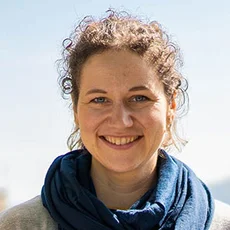
Stéphanie Di Rosa is a language technology specialist at the Swiss Federal Administration, where she supports users of machine translation and CAT tools and provides training on the use of language AI for language professionals and the general public.
Consultancy skills for language professionals
Date: 26 June 2026, 12 noon to 12.45 p.m. CET / 6.00 a.m. to 6.45 a.m. EST
Application deadline: 8 June 2026
Description of content: This webinar highlights the growing importance of consultancy skills for language professionals in the fields of translation and multilingual communication. Participants will learn why these competencies are now becoming essential and how they can enhance the value of linguistic expertise. The webinar will also shine a light on which core skills language consultants need if they are to offer effective support to clients in selecting appropriate language services and assessing the benefits, risks and practical implications of AI-driven solutions.

Prof Dr Caroline Lehr is a Professor of Translation Studies at IMK Institute of Multilingual Communication. Her research interests include translation processes and multilingual text production, the use of artificial intelligence in multilingual communication and AI literacy, as well as cognition, emotion and motivation in multilingual communication and language professions.
Make your own tools: a no-code approach to developing AI-agent-supported workflows for multilingual communication
Date: 21 August 2026, 12 noon to 12.45 p.m. CET / 6.00 a.m. to 6.45 a.m. EST
Application deadline: 3 August 2026
Description of content: Participants of this webinar will be introduced to a novel approach to multilingual communication using integrated development environments (IDEs) with built-in AI assistants. Unlike traditional AI language tools, IDEs – originally designed for code generation – allow language professionals to structure datasets in organised directories, instruct the AI to follow specific step-by-step processes and exercise control over files and workflows. We explore how this approach transforms multilingual communication work, enabling systematic project processing, structured content creation and automated workflows that go beyond translation. The session will examine capabilities and limitations, discusses practical applications for language service providers and addresses quality considerations and ethical implications.

Morgan Kavanagh is a lecturer and Head of Innovative Teaching and Learning at the Institute of Multilingual Communication (IMK) at the ZHAW. His work focuses on the intersection of AI technologies and multilingual communication, professional writing practices and the evolving role of language professionals alongside intelligent writing assistants.
Glossaries for machine translation
Date: 25 September 2026, 12 noon to 12.45 p.m. CET / 6.00 a.m. to 6.45 a.m. EST
Application deadline: 7 September 2026
Description of content: In this webinar, we will give a short overview of how glossaries interact with different machine translation systems and which integration methods are commonly used. We will then look at how concept-oriented terminology can be transformed into term-based glossaries suitable for MT workflows. Finally, we will briefly discuss how large language models handle terminology and what this means for future translation quality.

Tom Winter is a terminology and knowledge engineering specialist at Deutsche Bahn AG. He is responsible for the corporate terminology and the RDF-based knowledge graph that supports translation workflows, editorial processes, linguistic quality assurance and AI customisation across the organisation.
Language AI for language professionals
Date: 23 October 2026, 12 noon to 12.45 p.m. CET / 6.00 a.m. to 6.45 a.m. EST
Application deadline: 5 October 2026
Description of content: We will look at a selection of language AI tools that offer the potential to complement the work of language professionals. During the webinar, we will also review new tools and technologies that have been released in 2026 and look at what may be in the pipeline for 2027.

Florian Faes is the Managing Director of Slator and is based in Zurich. Slator is the leading source of research for the global translation, localisation and language technology industry. Our advisory practice is a trusted partner to clients looking for independent analysis.
Plain language made easy: the new ISO standard for science writing and other developments
Date: 20 November 2026, 12 noon to 12.45 p.m. CET / 6.00 a.m. to 6.45 a.m. EST
Application deadline: 2 November 2026
Description of content: What is plain language? And why do we need a new ISO plain language standard for science writing? In this webinar, we will explore the concept of text accessibility and present the latest guidelines and strategies for communicating effectively with intended readers.
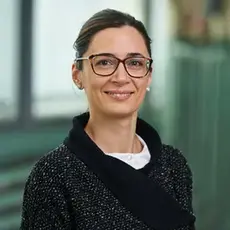
Luisa Carrer is a research associate and lecturer at the IMK. Her research interests include manual text simplification, human evaluation of automatic text simplification, accessible communication terminology, and inclusive research design.

Alexa Lintner is a research associate and lecturer at the IMK. Her research interests include audio description, human evaluation of machine translation, text simplification, and inclusive research design.
Prompt engineering for literary translators
Date: 18 December 2026, 12 noon to 12.45 p.m. CET / 6.00 a.m. to 6.45 a.m. EST
Application deadline: 30 November 2026
Description of content: As the language industry has embraced machine translation and post-editing since the advent of DeepL in 2017, the practice of literary translation has remained resolutely hands-on. This webinar takes as its starting point the belief that literary translation is and should remain a quintessentially human activity, but that Gen AI-based tools offer us an unparallelled resource, a valuable opportunity to plug into the linguistic hive-mind. How might literary translators harness the possibilities of Gen AI-based tools such as ChatGPT to enhance their own creativity? Can we view such tools as useful partners that accompany the translation process in a kind of Socratic dialogue? In this webinar, we will explore how we can usefully and efficiently prompt to help us do what we love.
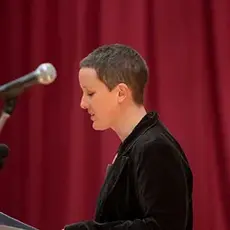
Prof. Chantal Wright is Professor for Creativity and the Language Industry. She is also a literary translator, and most recently translated the correspondence of Ingeborg Bachmann and Max Frisch, with her colleague Simon Pare.
Archive of past webinars
You can find details of our past webinar speakers and the topics they covered in our archive.
Enrolment
Fields marked with an asterisk are mandatory fields.