Combustion Research for a Climate-Neutral Energy System
How can sustainable and climate-neutral combustion processes contribute to a secure and climate-neutral energy supply? The Thermoacoustics and Sustainable Combustion research group at the ZHAW is conducting research into such solutions. The latest findings were presented at the Swiss Combustion Conference 2026.
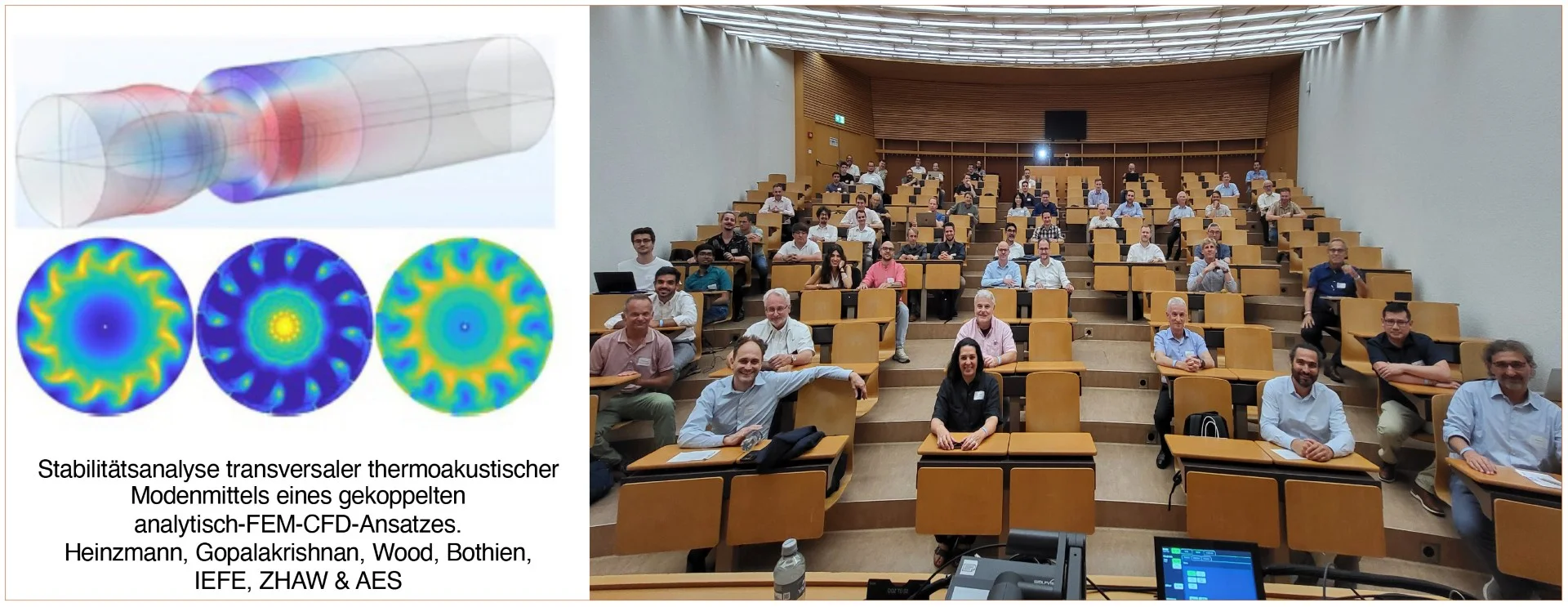
Combustion processes continue to play an important role in climate-neutral energy systems. This is because, where direct electrification reaches its limits and fluctuations in solar and wind energy need to be balanced out, technologies are required that convert alternative, CO₂-free fuels into electricity efficiently, safely and with the lowest possible emissions. Consequently, combustion research has evolved: alongside efficiency and output, the focus today is primarily on the flame behaviour and emissions of alternative fuels such as hydrogen, ammonia and methanol.
A leading player in applied research in the field of thermoacoustics
The Institute for Energy Systems and Fluid Engineering (IEFE) at the ZHAW, through its Thermoacoustics and Sustainable Combustion research group (TASC Laboratory), possesses proven expertise in combustion and thermoacoustic research. Together with the CAPS Lab at ETH Zurich, the IEFE is the only university research institution in Switzerland that conducts in-depth research into combustion acoustics. Among other things, the research investigates how flames behave when using new fuels and how combustion instabilities arise, can be predicted and prevented.
Networking combustion research
The IEFE also contributes this expertise to the Conference on Combustion Research in Switzerland, which is organised by the ZHAW in collaboration with ETH Zurich, the FHNW and the Swiss Federal Office of Energy (SFOE). Held every two years, the conference provides an overview of current developments in Swiss combustion research. It thus serves as a key platform for exchange between universities, research institutions, industry and the public sector.
This year’s conference on combustion research in Switzerland focused on alternative fuels and their use in gas turbines and internal combustion engines. Sixteen specialist presentations highlighted current research – ranging from the flame dynamics of hydrogen-methane mixtures, through the combustion of ammonia and turbulent hydrogen flames, to the auto-ignition combustion of pure methanol. Around 80 participants took the opportunity to exchange technical insights at the conference.
ZHAW presents two research papers
The TASC laboratory at the IEFE presented its own latest research findings in two specialist presentations:
- “Influence of thermo-diffusive effects and pressure on laminar premixed hydrogen flame transfer functions” by Dr. Harish Gopalakrishnan, TASC lab, IEFE, ZHAW
- Hydrogen-methane flame dynamics: experiments and numerical simulations by Viken Mouratian, TASC lab, IEFE, ZHAW
The papers demonstrate how the IEFE combines experimental studies and numerical simulations to gain a better understanding of the combustion behaviour of new fuels. In doing so, this research lays important foundations for combustion systems that can be operated efficiently, stably and with low emissions using renewable energy sources.
The conference also highlighted just how active and diverse combustion research is in Switzerland. The in-depth discussions between the research community, industry and the federal government underlined the importance of interdisciplinary exchange – and the role of the IEFE as a centre of excellence and research partner in this field.
A special moment was the farewell of Stephan Renz. He has supported and promoted combustion research in Switzerland on behalf of the Swiss Federal Office of Energy for many years and has played a key role in the ongoing success of the Swiss Combustion Conference.
The next conference on combustion research in Switzerland will take place in 2028.
Conference on Combustion Research in Switzerland 2026
Research Group Thermoacoustics and Sustainable Combustion
Mirko Bothien, Harish Gopalakrishnan, Viken Mouratian