Understanding Automation in the Train Cab
How does an active driving assistance system (AFAS) change the work of train drivers?
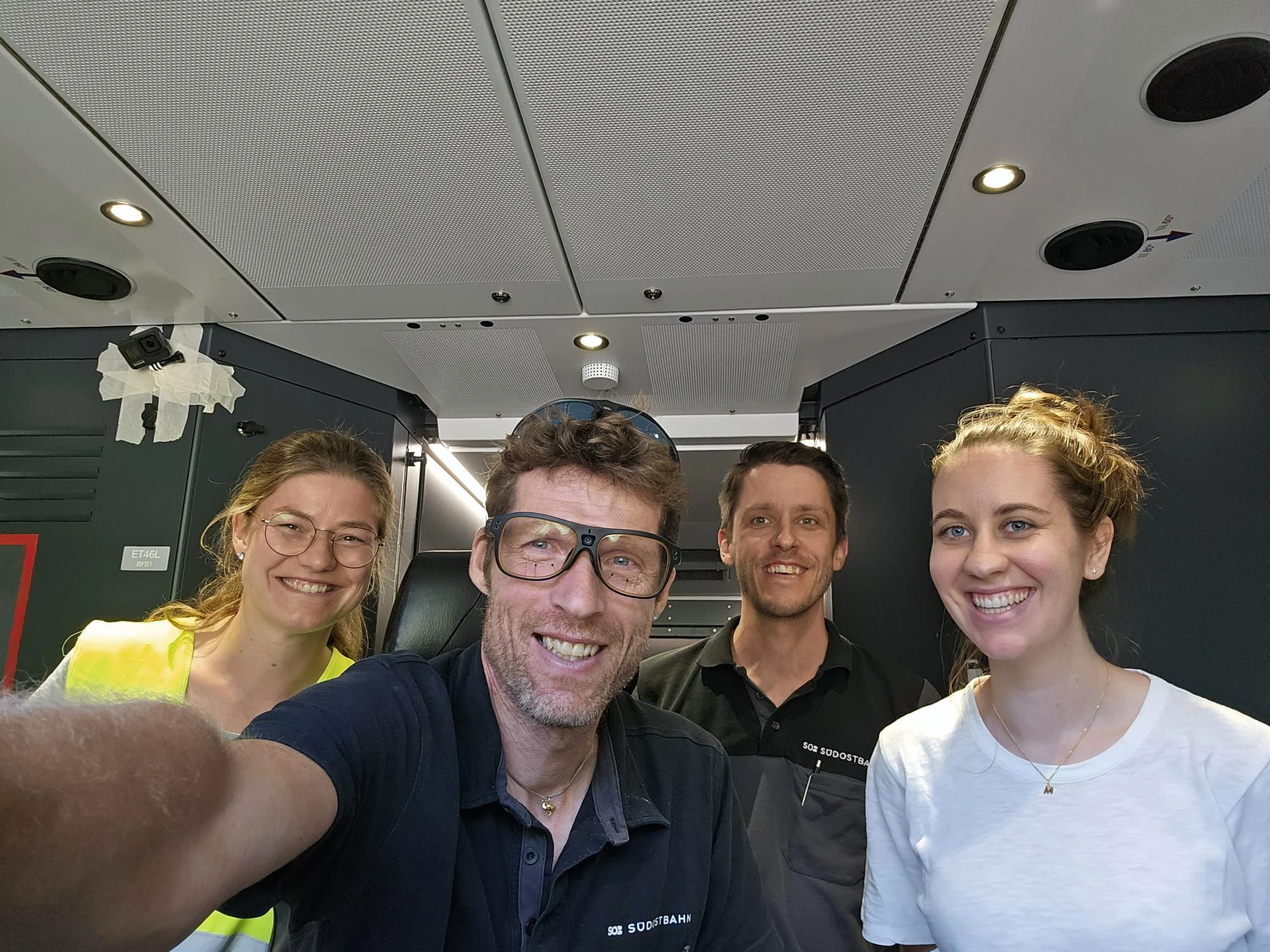
Together with the Südostbahn (SOB), the Human Factors team (HF) at the ZHAW Center for Aviation (ZAV) is investigating how automation affects the situational awareness, workload, and attention of train drivers.
As part of voluntary test runs on the S31 line between Biberbrugg and Arth-Goldau, various data are being collected that provide valuable insights into the human factor of rail automation.
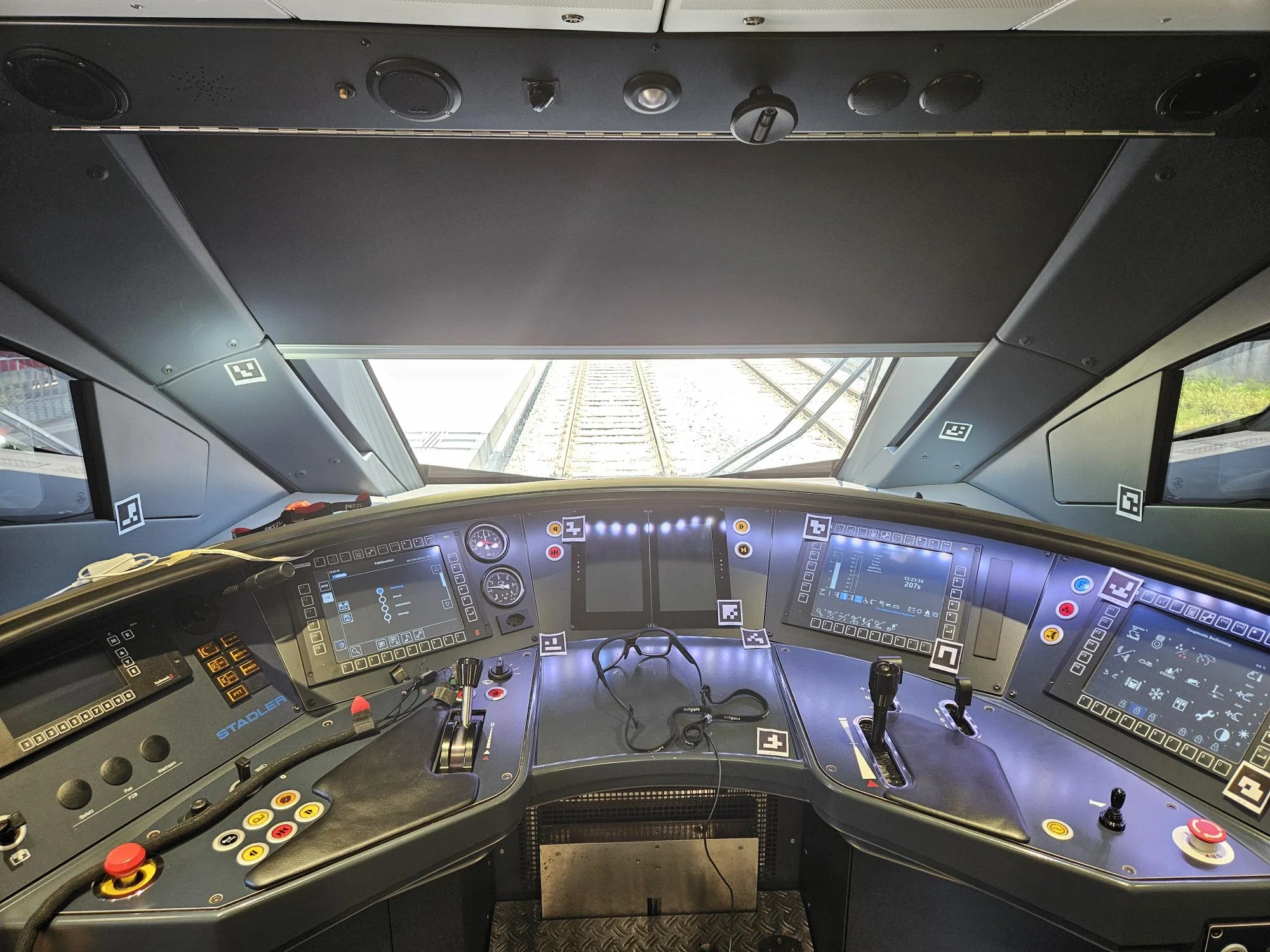
Using sensors such as physiological measurements (heart rate, breathing rate, skin conductance and skin temperature) and eye tracking combined with ArUco markers, we analyze where and how the drivers’ attention allocation, working style, and well-being change during operation with AFAS.
In close collaboration with the SOB, the Human Factors Team at ZAV conducts measurements to help:
- evaluate the usability and acceptance of AFAS,
- understand the impact on cognitive and manual skills as well as routines,
- and ultimately design the train cab workplace of the future to be safe, efficient, and comfortable.