Quantum Lab workshop at SDS 2026
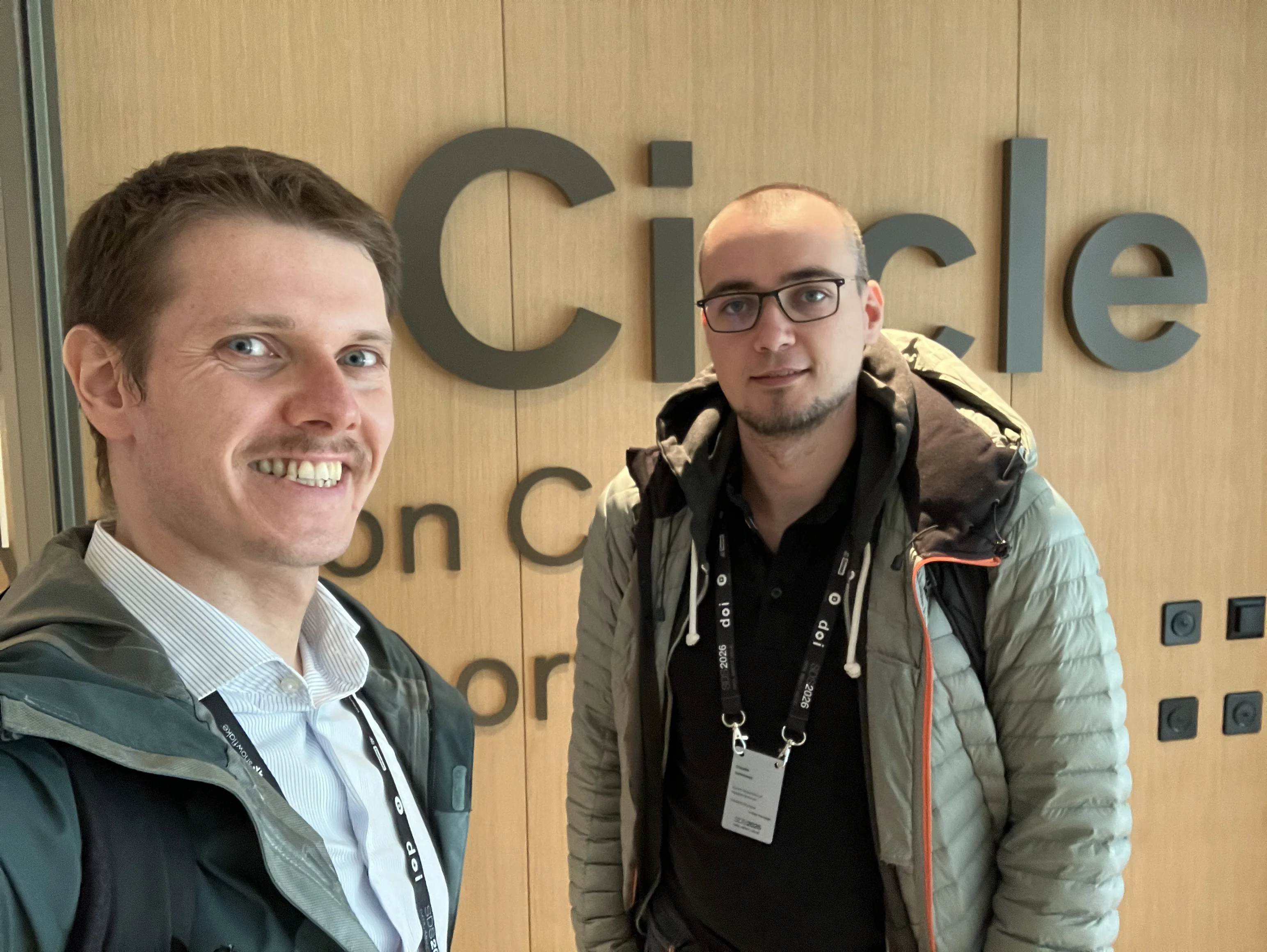
During the workshop day of SDS 2026, the 13th IEEE Swiss Conference on Data Science and AI, Dr Pavel Sulimov and Claude Lehmann led a hands-on session entitled “Quantum AI: From Inspiration to Enhancement – A Practical Journey”.
Held at The Circle Convention Center at Zurich Airport, SDS is one of Switzerland’s largest events dedicated to applied data science. It brings together practitioners and researchers from industry and academia, making it an ideal platform for introducing quantum machine learning to a broad data science audience.
The workshop was structured as a journey in two stages. It began with the fundamental ideas and intuitions behind quantum computing and explored why they matter for artificial intelligence. It then examined where quantum methods can realistically add value to machine learning workflows today.
Throughout the session, participants worked directly with the tools and code rather than simply observing demonstrations. This gave them a practical understanding of both the potential and the current limitations of the technology.
“There is a great deal of hype surrounding quantum AI, so our aim was to cut through the noise and give participants the opportunity to try the methods for themselves. By the end of the workshop, they could see first-hand where quantum technologies can already enhance a machine learning pipeline and where the honest answer is still ‘not yet’,” says Pavel Sulimov, Head of the ZHAW Quantum Lab.
All materials from the session are available in the public workshop repository.
Repository: github.com/sulimovp/sds_quantum_workshop