First Quantum Machine Learning course held
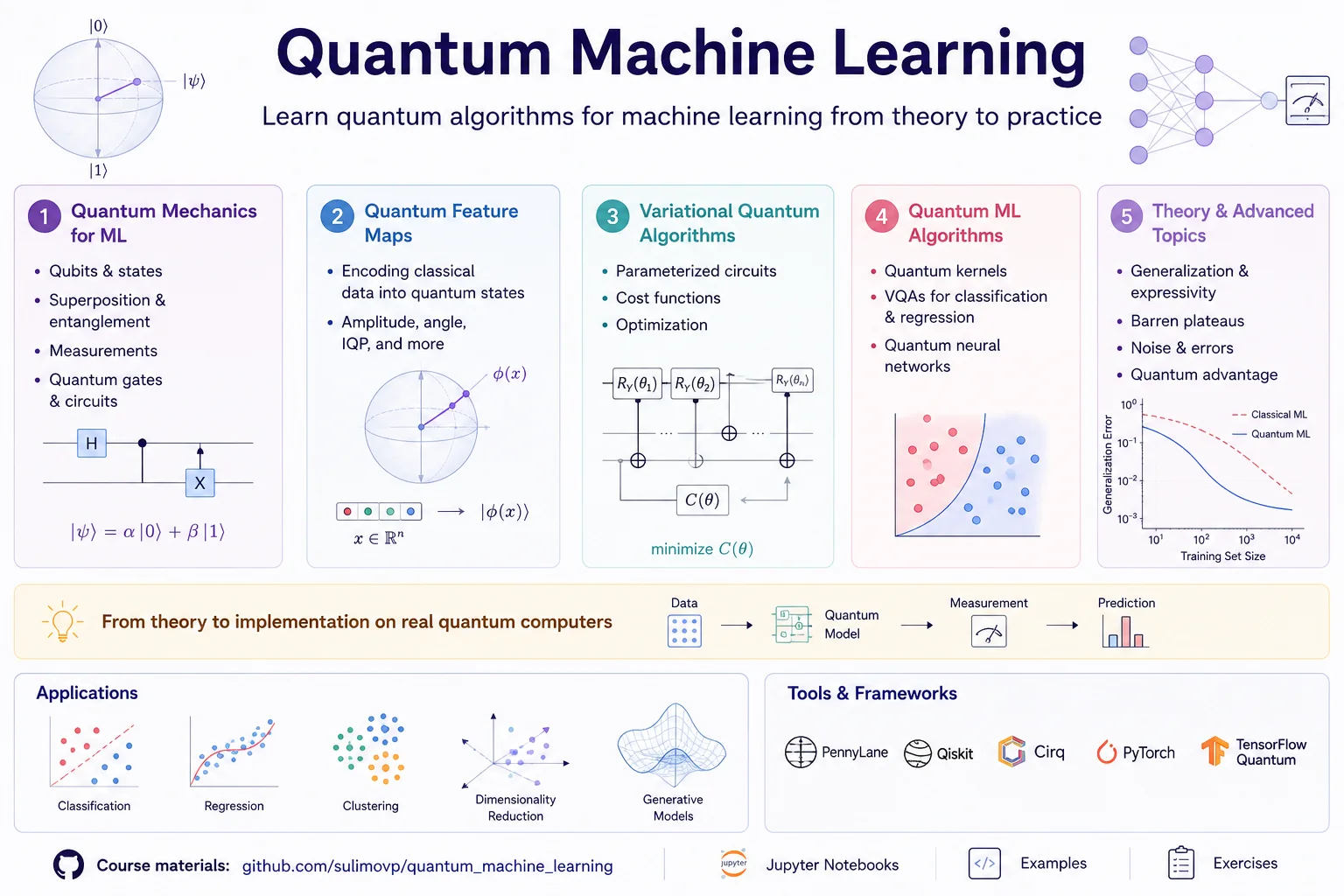
In the spring semester of 2026, the Quantum Lab offered Quantum Machine Learning as a supplementary course within the Master of Science in Engineering (MSE) programme for the first time. Hosted by the Institute of Computer Science (InIT), the seminar was led by Dr Pavel Sulimov and brought together Master’s students from ZHAW and BFH with a range of engineering backgrounds.
The course explored the intersection of quantum computing and machine learning, focusing on how quantum algorithms can be applied to pattern recognition, optimisation and predictive analytics. Rather than remaining purely theoretical, it pursued two concrete objectives: helping students understand what quantum advantage could mean for machine learning and enabling them to implement quantum machine learning models for real-world use cases.
Over the course of the semester, the students progressed from the fundamentals of quantum computing and the key differences between classical and quantum machine learning to hands-on experimentation with different types of data, including tabular, text, image and speech data, as well as a variety of quantum circuit ansätze.
They constructed a basic hybrid classical–quantum neural network and then adapted its architecture. They also explored practical techniques for making quantum neural networks trainable, including ways of introducing non-linearity and avoiding overfitting. To conclude the course, the students applied what they had learned to a specific problem in an individual project.
“What struck me most was how quickly the students progressed from first principles to solutions with a genuine practical application. Bringing ZHAW and BFH students with very different backgrounds into the same room to compare approaches is exactly the kind of exchange this young field needs,” says Pavel Sulimov, Head of the ZHAW Quantum Lab.
The complete set of course materials and the accompanying code are freely available to anyone interested in working through them.
Repository: github.com/sulimovp/quantum_machine_learning